

Introduction
A dead tree can look harmless for months. Then a Virginia summer storm hits. Wind pulls at the branches. Rain softens the ground. A weak tree can drop limbs or fall fast. Dead tree removal helps stop that risk before it reaches your home, fence, car, or walkway.
Homeowners often call after storm damaged trees have already made a mess. A cracked trunk, broken limb, or leaning tree can create real danger around the yard. This guide explains what makes dead trees unsafe, what signs to watch for, and how Woodchuck can help with honest tree care advice.
Dead Trees Break Down From The Inside
A dead tree loses strength in quiet ways. The wood dries out. Branches become stiff. Roots begin to weaken below the soil.
From the yard, the tree may still look steady. It may stand straight. Bark may still cover most of the trunk.
Storms expose the weak spots. Wind pushes the canopy. Rain adds weight. The dead wood can split, crack, or fall.
Healthy trees move with rough weather. Dead trees do not handle that pressure well. One hard storm can reveal decay that has built up for months.
Woodchuck sees this often during storm cleanup calls. The tree did not become unsafe overnight. The storm only made the hidden damage clear.
Virginia Summer Storms Add More Stress
Virginia summer weather can change fast. A quiet afternoon can turn into heavy rain and strong wind. Dead trees struggle with that sudden pressure.
Wind pulls on limbs and branches. Rain weighs them down. Wet soil loosens around the root system. Each part adds strain.
A dead tree may fail in pieces. One limb drops first. Another cracks later. The trunk may lean more after the next storm.
That slow failure still creates danger. A limb can hit a roof. A split trunk can fall across a driveway. A tree near a fence can damage more than one property.
Storm damaged trees need a careful look. The worst damage may sit high in the canopy or low near the roots.
Rotten Roots Can Let A Tree Fall Fast
Roots hold a tree in place. After a tree dies, those roots start to rot. Most of that damage stays hidden underground.
Heavy rain makes the problem worse. Soft soil gives roots less grip. A weak root plate can shift. The whole tree can lean or fall.
Look around the base of the tree. Raised soil can signal movement. Cracked ground can point to root trouble. Mushrooms near the trunk can mean decay. Soft wood near the root flare needs attention.
A leaning dead tree should not sit through another storm season. It may look stable today. Tomorrow’s rain can change that.
Dead tree removal is easier before the ground stays soaked. Crews can plan the work. Equipment can move safely. The job does not start with a tree already on a roof.
Dead Limbs Often Fall First
A full tree does not need to fall to cause damage. Dead limbs can break long before the trunk gives out. They dry out, turn brittle, and snap under wind.
Large branches can crush gutters. They can dent vehicles. They can break fences and sheds. Smaller limbs can still hurt someone walking below.
Bare limbs during the growing season deserve attention. Peeling bark also matters. Cracks where a limb meets the trunk can show weakness. Hanging branches after a storm should be treated as unsafe.
Do not stand under a dead limb. Do not shake it loose. Do not pull it down with a rope.
Woodchuck keeps this advice simple. Stay back, take a photo, and call a crew that works with trees every day.
Hollow Trunks Can Fool Homeowners
Some dead trees look solid from the street. The trunk may look wide. The tree may stand straight. Nothing may seem urgent at first glance.
Inside, the center can be soft or hollow. Rot can remove the strength that holds the tree upright. Insects can make that damage worse.
Fungus on the trunk is one clue. Woodpecker holes can point to insect activity. Sawdust near the base can mean bugs are working inside the wood. Deep cracks need a closer look.
A hollow trunk can fail in a strange way. It can split, twist, or break apart under pressure. That makes removal more dangerous.
This is where a trained tree crew matters. Woodchuck checks the tree, the lean, the nearby space, and the safest removal plan. Honest advice comes first. Removal is not pushed when trimming or monitoring makes better sense.
Storm Damage Can Show Up Later
A tree can look fine right after a storm. The next day, a limb may hang lower. A week later, a trunk crack may open wider. After more rain, the tree may lean.
Storm damaged trees do not always fail right away. Some cracks hide in the canopy. Some damage starts at the roots. Some splits stay partly closed until wind moves the tree again.
That delay can trick homeowners. The yard looks clear, so the tree gets ignored.
Walk the property after strong weather. Look from a safe distance. Watch for fresh cracks, torn bark, hanging limbs, and branches stuck in other branches.
Pay close attention to trees near daily traffic areas. Driveways, porches, sidewalks, and play areas matter most. A weak tree near those spots carries more risk.
Trees Near Homes Need Faster Care
Location changes the level of risk. A dead tree far from buildings may not need the same timeline. A dead tree beside a house is different.
Think about what the tree can hit. Roofs, garages, parked cars, fences, sheds, and patios are common targets. Neighboring property can be at risk too.
Power lines need extra caution. Stay away from any tree touching a line. Call the utility company first.
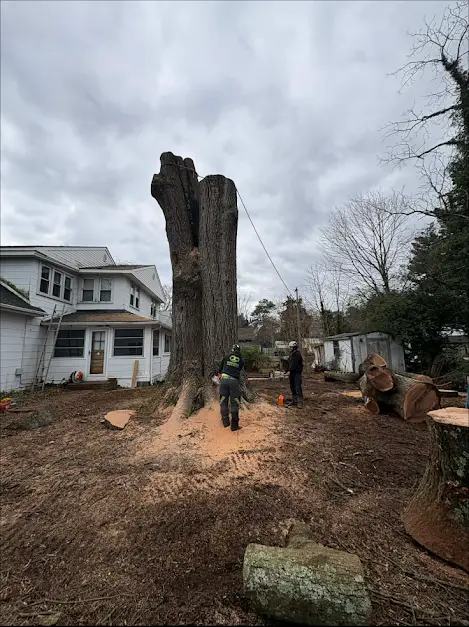
Dead tree removal near structures takes planning. Crews may need to remove the tree in sections. Ropes, lifts, and careful cuts help protect nearby property.
Woodchuck’s work is built around practical tree care. The goal is simple. Remove the hazard, respect the property, and clean up the area.
DIY Tree Removal Is Not Worth The Risk
Dead trees behave badly during cutting. A limb can snap early. A trunk can split. A section can fall the wrong way.
Wet ground adds trouble. Ladders add more. A chainsaw near an unstable tree is not a safe mix.
Small branches already on the ground are one thing. Large dead limbs, leaning trees, and trunks near structures need a professional crew.
A trained crew looks at weight, lean, decay, and the drop zone. They decide what to cut first. They control each section.
That is the difference between guessing and doing the work safely. Woodchuck brings skill, equipment, and plain advice. No scare tactics. No overselling. Just tree care done with care.
What To Check Before Storm Season
A short yard check can catch problems early. Start with trees closest to the house. Then look near the driveway, fence, sidewalk, shed, and utility lines.
Look for bare branches. Notice missing bark. Check for cracks, fungus, holes, and soft spots. Step back and look for a new lean.
Do not climb a dead tree. Do not cut limbs above your head. Do not work near power lines.
Take a few photos if something looks wrong. Call for an inspection. A clear photo can help explain the concern before a crew arrives.
Free estimates help homeowners get answers without pressure. Woodchuck keeps the process simple. You share the concern. The crew checks the tree. You get a clear recommendation.
Get Dead Trees Checked Before The Next Storm
Dead trees do not improve with time. Heat dries the wood. Rain weakens the soil. Wind keeps testing the same weak spots.
Waiting can turn a planned job into an emergency. That means more stress, more cleanup, and more risk to the home.
Dead tree removal gives homeowners control before the weather takes it away. It can protect roofs, cars, fences, and busy outdoor spaces.
Woodchuck brings honest tree care, fair pricing, and respect for the property. If a tree looks dead, cracked, leaning, or storm damaged, get it checked before Virginia’s next round of summer weather.